
Every Indian eventually ends up in Delhi, whether for a work trip, a college reunion, or simply a layover before heading somewhere else. Yet so many of us treat the capital as just a transit point, a place we pass through without actually seeing. That’s genuinely a missed opportunity, because Delhi packs more history into its streets than almost any other Indian city, Mughal emperors, colonial architects, and modern India’s own founding moments all left their mark within a few kilometres of each other.
What makes this genuinely worth planning properly is how compact Delhi’s must-see circuit actually is. You don’t need weeks, just 3 to 4 well-organised days genuinely cover the essentials, provided you know which five places anchor everything else. October through March brings the most pleasant weather for walking around these monuments, so timing your visit right matters as much as choosing the right places to see.
Red Fort: Where Mughal Power Once Ruled and India’s Freedom Was Declared
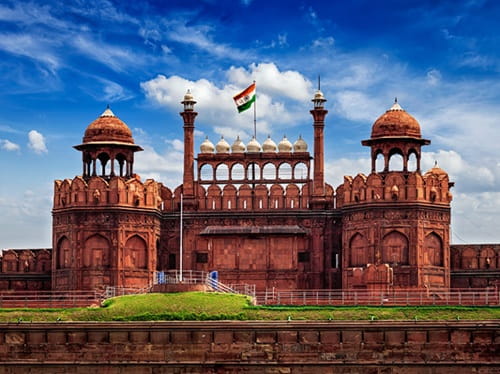
No Delhi itinerary genuinely starts anywhere else. Built by Shah Jahan in 1639 when he shifted the Mughal capital from Agra to Delhi, this UNESCO World Heritage Site remains one of India’s most powerful symbols, both of Mughal grandeur and of the country’s own independence story. Every Independence Day, India’s Prime Minister addresses the nation from these very ramparts, a tradition that genuinely connects this red sandstone fortress to modern India’s most important annual moment.
Inside, you’ll find several museums alongside the imposing walls themselves, and an evening light-and-sound show recounts Delhi’s history in both Hindi and English. Chawri Bazar is the nearest metro station, and pairing your Red Fort visit with nearby Chandni Chowk and Jama Masjid genuinely makes for a complete Old Delhi day rather than a rushed single stop.
Jama Masjid and Chandni Chowk: Old Delhi’s Living, Breathing Heart
Step out of Red Fort, and you’re immediately in the middle of Old Delhi’s most atmospheric stretch. Jama Masjid, commissioned by Shah Jahan as his final architectural achievement, is India’s largest mosque, genuinely capable of holding over 25,000 worshippers within its vast courtyard. Climb the southern minaret at sunset for a view that stretches across Old Delhi’s rooftops all the way to Red Fort in the distance, genuinely one of the best photo opportunities in the entire city.
Right alongside it sits Chandni Chowk, a 17th-century market built by Shah Jahan that remains genuinely as chaotic and alive today as it likely was centuries ago. Narrow lanes packed with spice vendors, textile shops, and legendary street food stalls make this the place to actually taste Delhi rather than just photograph it, head to Paranthe Wali Gali for stuffed parathas or try the chole bhature that locals genuinely swear by. Dress modestly for the mosque, and time your visit outside prayer hours, roughly 7 AM to 12 PM and 1:30 PM to 6:30 PM work best for tourist entry.
India Gate: The War Memorial That Doubles as Delhi’s Favourite Evening Spot
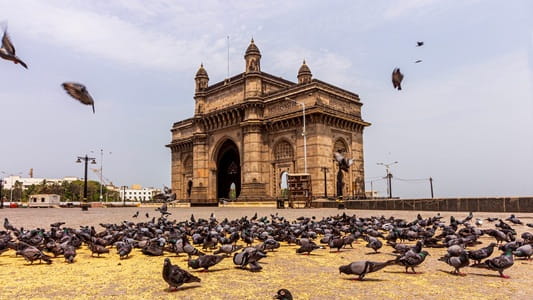
Built in 1931 by Sir Edwin Lutyens and inspired by Paris’s Arc de Triomphe, India Gate commemorates the 82,000 soldiers who died during the First World War and the Third Anglo-Afghan War. What genuinely makes this monument special is how it functions in daily Delhi life, families spread out on the surrounding lawns most evenings, ice cream vendors do brisk business, and the monument itself glows beautifully under golden lights after sunset.
Entry is free and the site stays open 24 hours, making it genuinely flexible to fit into any itinerary. The Amar Jawan Jyoti, once housed directly at India Gate, now sits within the National War Memorial nearby since 2022, worth visiting together if military history genuinely interests you. Central Secretariat metro station on the Yellow and Violet lines gets you there easily, and 45 minutes to an hour comfortably covers a relaxed visit.
Qutub Minar: The World’s Tallest Brick Minaret, Still Standing After 800 Years
In Delhi’s Mehrauli area sits Qutub Minar, a 72.5-metre victory tower that’s genuinely held the title of the world’s tallest brick minaret since construction began in 1192. Commissioned by Qutbu’d-Din Aibak, founder of the Delhi Sultanate, the minaret showcases intricate Arabic inscriptions and carved balconies across its five distinct storeys, each added by a different ruler over subsequent centuries.
The surrounding Qutub complex, a UNESCO World Heritage Site in its own right, includes the Quwwat-ul-Islam mosque, the mysterious Iron Pillar that’s genuinely resisted rusting for over 1,600 years, and the unfinished Alai Minar, an ambitious project that intended to double the original minaret’s height. Visit during early morning or late afternoon for the best light and cooler temperatures, and if you’re genuinely into history, extend your visit to the adjacent Mehrauli Archaeological Park, spread across 200 acres with over 100 monuments spanning multiple dynasties.
Humayun’s Tomb: The Garden Tomb That Genuinely Inspired the Taj Mahal
Built in the mid-16th century by Humayun’s widow, this UNESCO World Heritage Site holds a genuinely important place in architectural history, it’s the Indian subcontinent’s first garden-tomb, and its symmetrical design directly influenced the Taj Mahal that came decades later. Constructed from red sandstone with white marble accents, the tomb sits within meticulously maintained Persian-style gardens that feel genuinely peaceful compared to the crowds at some of Delhi’s other major sites.
This is genuinely one of Delhi’s most photogenic locations, the combination of Mughal architecture and manicured gardens creates striking compositions regardless of what time you visit. Pair Humayun’s Tomb with a stop at the nearby Lotus Temple, whose 27 marble petals and pure white, blooming-flower design offer a completely different, modern architectural experience within the same afternoon.
Frequently Asked Questions
Q1. How many days do I genuinely need to cover these five places without rushing through Delhi?
A. Three to four days comfortably covers Red Fort, Jama Masjid, Chandni Chowk, India Gate, Qutub Minar, and Humayun’s Tomb, with day one typically focused on Old Delhi and the remaining days split between New Delhi’s monuments and South Delhi’s heritage sites.
Q2. Is it safe to explore Old Delhi’s crowded lanes like Chandni Chowk on foot?
A. Generally yes during daytime hours, though it’s worth staying alert in crowded areas, keeping valuables secure, and avoiding isolated lanes after dark. Sticking to well-lit, busy sections and using trusted transport like Uber or Ola for getting to and from the area is a sensible precaution.
Q3. Do I need to book tickets in advance for Red Fort, Qutub Minar, or Humayun’s Tomb?
A. It’s genuinely worth booking online in advance where possible, particularly during peak season from October to March, since this saves time standing in ticket lines and some monuments offer discounted rates for online booking compared to purchasing at the gate.
Q4. What’s the best way to get between these five locations without wasting time in Delhi traffic?
A. Delhi’s metro network genuinely covers most of these sites well, Chawri Bazar for Red Fort, Central Secretariat for India Gate, and dedicated Qutub Minar and Jama Masjid stations, making it considerably faster and more predictable than relying purely on cabs during peak traffic hours.

Leave a Reply