
Picture this: a rhino grazing quietly in golden grasslands while mist rises off the Brahmaputra, monks chanting inside centuries-old monasteries on a river island bigger than some countries’ capital cities, and a temple where legends of divine power have drawn pilgrims for a thousand years. This isn’t a fantasy travel brochure, it’s an ordinary week in Assam. For Indian travellers tired of the same hill-station-and-beach rotation, Assam offers something genuinely different, a state where wildlife, spirituality, and living history sit within a few hours’ drive of each other.
What makes this matter right now is timing. Assam’s tourist season runs roughly October through April, when the weather turns pleasant, wildlife parks reopen after monsoon closure, and the Brahmaputra valley looks genuinely spectacular. If a Northeast India trip has been sitting on your travel list, here are the five places that consistently define what makes Assam worth the journey.
1. Kaziranga National Park: Where the Rhinos Actually Outnumber Your Expectations
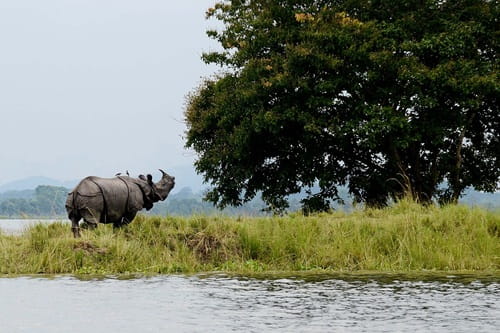
Kaziranga isn’t just Assam’s most famous destination, it’s genuinely one of India’s great wildlife success stories. This UNESCO World Heritage Site, spread across roughly 430 square kilometres between Golaghat and Nagaon districts, holds the world’s largest population of the one-horned rhinoceros, alongside tigers, wild elephants, swamp deer, and sloth bears moving through elephant grass landscapes that feel genuinely primal.
Getting here from Guwahati takes about 4 to 5 hours by road via NH-37, and most visitors combine jeep safaris with an early-morning elephant safari for a genuinely closer wildlife encounter. Entry costs a modest ₹100 for Indian nationals, with safari charges billed separately, and the park operates from 7:30 AM to 2:30 PM. The park closes entirely during monsoon flooding, so November through April genuinely offers the best combination of open safari routes and comfortable weather. A two-day Kaziranga trip from Guwahati typically runs ₹8,000 to ₹12,000 depending on your vehicle and season, excluding safari fees.
2. Majuli Island: The World’s Largest River Island, Living Quietly on Its Own Terms
If Kaziranga represents Assam’s wild side, Majuli represents its soul. This freshwater island in the Brahmaputra, reachable by ferry from Jorhat, holds the genuine distinction of being the world’s largest river island, and it carries an atmosphere unlike anywhere else in India. Majuli is home to numerous Vaishnavite Satras, monasteries founded centuries ago that still practice traditional mask-making, devotional dance, and music exactly as they have for generations.
What genuinely sets Majuli apart is how unhurried it feels. Paddy fields stretch toward the horizon, village life moves at its own pace, and the ferry crossing itself becomes part of the experience rather than a mere formality. Visit the Kamalabari and Auniati Satras specifically to witness monks demonstrating traditional crafts, and plan your visit between October and March when the weather stays cool and the ferry schedules run more predictably. Given how much of Majuli’s charm depends on river conditions, building in some buffer time for weather-related ferry delays genuinely saves you frustration.
3. Kamakhya Temple and Guwahati: Assam’s Spiritual and Practical Heart
Every Assam journey genuinely begins and often ends in Guwahati, the state’s largest city and the practical gateway connecting travellers to everywhere else in Northeast India. But Guwahati isn’t merely a transit stop, it’s home to Kamakhya Temple, perched on Nilachal Hill, one of the most revered Shakti Peeth temples in the country and one of just four locations in India considered to hold the highest divinity in Hindu tradition.
What makes Kamakhya genuinely distinctive is its unique worship tradition, centred around a natural rock formation rather than a conventional idol, representing the divine feminine. Dress modestly when visiting, and check festival periods in advance since crowd levels shift considerably around specific religious occasions. Beyond the temple, Guwahati offers a sunset cruise along the Brahmaputra, a visit to Umananda Island, the world’s smallest inhabited river island sitting right in the middle of the city, and the Assam State Museum for a deeper look at the region’s history. Two days is genuinely sufficient to cover Guwahati’s core sights comfortably.
4. Manas National Park: The UNESCO Site Fewer Tourists Know About
While Kaziranga gets most of the attention, Manas National Park genuinely deserves equal billing. This UNESCO World Heritage Site, sitting in the foothills of the Himalayas roughly 176 kilometres from Guwahati, is Assam’s only tiger reserve and also protects rare species like the golden langur and red panda, animals you genuinely won’t spot at Kaziranga.
Manas offers a considerably different landscape too, forests, grasslands, and river valleys rather than pure elephant grass terrain, giving your Assam itinerary genuine visual variety if you’re spending several days in the state. Because it draws noticeably fewer crowds than Kaziranga, safaris here often feel more personal and less rushed, genuinely appealing if you’d rather avoid queues of jeeps at a single sighting.
5. Sivasagar: Where Assam’s Royal History Genuinely Comes Alive
For travellers who want history rather than just wildlife and temples, Sivasagar delivers Assam’s most concentrated dose of heritage. This historic town, once the capital of the mighty Ahom kingdom that ruled Assam for six centuries, is dotted with ancient tanks, palaces, and monuments that genuinely tell the story of a dynasty most Indians outside the Northeast rarely learn about in school.
Structures like the Rang Ghar, often called Asia’s oldest amphitheatre, and the Talatal Ghar palace complex give Sivasagar a genuinely distinctive character within Assam’s tourist circuit, appealing considerably more to history enthusiasts than a checklist tourist. Combining Sivasagar with nearby Jorhat’s tea estates, since this region is genuinely considered the tea capital of Assam, creates a natural heritage-and-plantation extension to any itinerary built around Kaziranga and Majuli.
Frequently Asked Questions
Q1. What’s genuinely the best time of year to visit Assam for wildlife and comfortable travel overall?
October through April offers the best combination, wildlife parks like Kaziranga reopen after monsoon closure, weather stays pleasant with minimal rainfall, and ferry services to Majuli run more reliably than during the humid, flood-prone monsoon months.
Q2. Do I need any special permits to travel within Assam itself?
No, Assam doesn’t require an Inner Line Permit for Indian citizens, though if you’re planning to extend your trip into neighbouring Arunachal Pradesh or Nagaland, you’ll need to arrange permits specifically for those states in advance.
Q3. How many days should I genuinely plan for covering these five places properly?
A realistic itinerary covering Guwahati, Kaziranga, and Majuli comfortably needs 6 to 7 days, while adding Manas and Sivasagar without feeling rushed typically stretches a full trip to around 9 to 10 days, given the travel time between destinations.
Q4. Is Kaziranga worth visiting if I’ve already been to other Indian wildlife parks like Ranthambore or Jim Corbett?
Yes, genuinely, since Kaziranga’s landscape and signature species, particularly the one-horned rhinoceros in its elephant grass habitat, offer a completely different wildlife experience from India’s more commonly visited central and northern parks.
Leave a Reply