
Draw a map of West Bengal, and you’ll notice something genuinely rare among Indian states: snow-capped Himalayan peaks at one end, and mangrove forests meeting the Bay of Bengal at the other, all connected by a capital city that’s produced more poets, filmmakers, and Nobel laureates than places twice its size. This kind of range is exactly why West Bengal genuinely rewards travellers willing to look beyond just Darjeeling’s tea gardens or Kolkata’s colonial charm, both genuinely worth visiting, but only part of a much bigger, richer picture.
Here’s what makes planning this trip genuinely practical: West Bengal’s best season runs October through March for most destinations, while the hill stations specifically stay pleasant from March through June too, when the plains below get uncomfortably hot. Understanding which five places anchor a genuinely well-rounded West Bengal trip, and when to visit each, saves you from cramming too much into too little time.
Darjeeling: The Queen of Hills That Genuinely Earns Its Crown
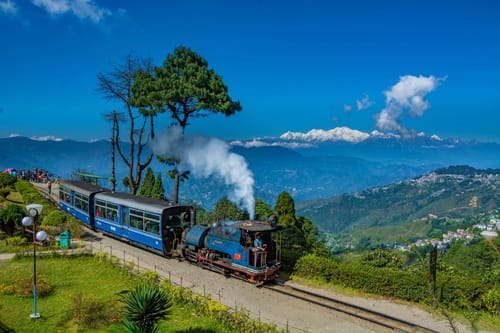
Perched at 2,050 metres in the Shivalik hills, Darjeeling remains West Bengal’s single most popular destination, and once you’ve watched sunrise over Kanchenjunga from Tiger Hill, it’s genuinely easy to understand why. This former summer capital of British India built its reputation on tea, and rolling estates still blanket the hillsides, offering both scenic beauty and, if you’re interested, genuine insight into how the world’s finest tea actually gets produced.
The Darjeeling Himalayan Railway, a UNESCO World Heritage Site itself, remains the town’s signature experience, its toy train winding through sharp bends and switchbacks that feel genuinely unlike any other rail journey in India. Beyond the train ride and sunrise viewpoint, spend time at the Batasia Loop, Peace Pagoda, and the Darjeeling Himalayan Zoo, where you might spot the playful red panda alongside other Himalayan wildlife. Three to five days genuinely lets you cover Darjeeling properly, and the best weather windows run March through June and again October through December.
Kolkata: Where Bengal’s Intellectual Soul Genuinely Lives
Formerly Calcutta, Kolkata is India’s second-largest city and genuinely one of its most culturally significant, home to the legacies of Rabindranath Tagore, Satyajit Ray, and generations of writers, artists, and thinkers who shaped modern Indian thought. This isn’t a city you visit just for monuments, though the Victoria Memorial, Howrah Bridge, and Dakshineswar Temple genuinely deserve your time, it’s a city you visit to feel the texture of intellectual and artistic Bengal firsthand.
Kolkata’s tram rides, among the last surviving in India, offer a genuinely nostalgic way to move through the city’s older neighbourhoods, while the Indian Museum houses one of the subcontinent’s most impressive collections of art and antiquities. If your visit coincides with Durga Puja, typically in September or October, you’ll witness Kolkata at its most spectacular, elaborate pandals and citywide celebration that genuinely transforms the entire city for several days. Street food here deserves genuine attention too, phuchka, kathi rolls, and telebhaja are worth building your itinerary around rather than treating as an afterthought.
Sundarbans National Park: The Only Place You’ll Genuinely See Tigers Swimming
About 110 kilometres south of Kolkata sits the world’s largest mangrove forest, a UNESCO World Heritage Site and Tiger Reserve that offers a genuinely unique wildlife experience unlike anywhere else in India. The Sundarbans is home to the Royal Bengal Tiger, alongside spotted deer, crocodiles, and an impressive range of bird species, all navigable only by boat through a maze of tidal channels and mangrove islands.
Since this park is accessible exclusively by waterways, plan your visit through an organised boat safari covering watchtowers like Sajnekhali, Dobanki, and Sudhanyakhali, where sightings genuinely happen, though patience matters since tigers here are elusive by nature. November through March offers the best visiting conditions, and a 2 to 3 day trip, typically routed through Godkhali by road before continuing by boat, genuinely gives you enough time to experience the Sundarbans’ distinctive, watery wilderness without feeling rushed.
Digha: Bengal’s Answer to a Quick, Affordable Beach Escape
For travellers wanting sun and sand without an elaborate itinerary, Digha delivers exactly that, a coastal town on the Bay of Bengal that’s become West Bengal’s most accessible, budget-friendly beach getaway. Old Digha and New Digha Beach form the core attractions, alongside a Marine Aquarium and Science Centre that genuinely add variety beyond just lounging by the water.
Digha’s biggest advantage is genuine convenience, direct trains and buses connect it to Kolkata in just 4 to 5 hours, making it a realistic weekend option rather than requiring extensive planning. September through March brings the most pleasant weather, and a 2 to 3 day trip covers the essentials comfortably, walking the beach, trying fresh seafood, and simply unwinding by the water without needing to chase a packed sightseeing schedule.
Kalimpong: The Quieter Himalayan Escape Most Travellers Skip
If Darjeeling’s crowds feel like too much, Kalimpong offers genuinely the same Himalayan charm with considerably fewer tourists. This hill station, sitting at roughly 1,200 metres and known for its monasteries, flower nurseries, and sweeping mountain views, has quietly become the preferred choice for travellers who want a calmer, more contemplative Himalayan experience rather than Darjeeling’s busier tourist circuit.
Kalimpong genuinely rewards slow exploration, wander through its Buddhist monasteries, visit the flower nurseries that supply orchids across India, and simply sit with the mountain views rather than rushing between checklist attractions. Its proximity to Darjeeling, roughly 70 kilometres, makes it genuinely easy to combine both destinations in a single trip, splitting your Himalayan days between Darjeeling’s iconic sights and Kalimpong’s quieter, more peaceful pace.
Frequently Asked Questions
Q1. How many days do I genuinely need to cover Darjeeling, Kolkata, and one other destination on this list?
A. A realistic itinerary covering Kolkata for 2 to 3 days and Darjeeling for another 3 to 5 days needs about a week total, and adding either Sundarbans or Digha as a shorter 2 to 3 day extension works well if you have 9 to 10 days available overall.
Q2. Can I visit the Sundarbans as a day trip from Kolkata, or does it genuinely need an overnight stay?
A. While technically possible as a very long day trip, an overnight stay genuinely offers a considerably better experience, since early morning and evening boat safaris tend to have the best wildlife sighting chances, and a rushed single-day visit often means missing these optimal viewing windows entirely.
Q3. Is West Bengal genuinely worth visiting during monsoon season, or should I avoid it entirely?
A. Monsoon, running roughly July through September, does bring West Bengal’s landscape to its greenest and most lush state, but heavy rainfall can genuinely disrupt travel in hill areas like Darjeeling and Kalimpong due to landslide risk, so it’s generally better suited to Kolkata sightseeing than hill station or Sundarbans visits during this period.
Q4. Which of these five places is most suitable for a family trip with young children and elderly relatives?
A. Digha and Kolkata genuinely work best for mixed-age family groups, since both offer easy accessibility, comfortable infrastructure, and a relaxed pace, while Sundarbans’ boat-based exploration and Darjeeling’s hill terrain demand slightly more physical stamina and patience, better suited to families with older children or more mobile elderly travellers.

Leave a Reply