
Every school textbook mentions Bihar as the birthplace of Buddhism and the site of one of the world’s oldest universities, yet remarkably few Indians actually visit to see it firsthand. That’s genuinely a loss, because Bihar isn’t just historically significant on paper, it’s home to living pilgrimage sites where Buddha attained enlightenment, ancient university ruins that once drew scholars from across Asia, and Sikh, Jain, and Hindu heritage all woven into the same compact stretch of land.
What makes planning this genuinely straightforward is Bihar’s geography, Bodh Gaya, Nalanda, Rajgir, and Vaishali all sit within a few hours of Patna, the state capital, letting you build a genuinely meaningful heritage circuit without extensive travel between destinations. October through February brings the most comfortable weather for sightseeing, since Bihar’s summers turn genuinely oppressive and severely limit outdoor exploration.
Bodh Gaya: Where Buddhism Genuinely Began
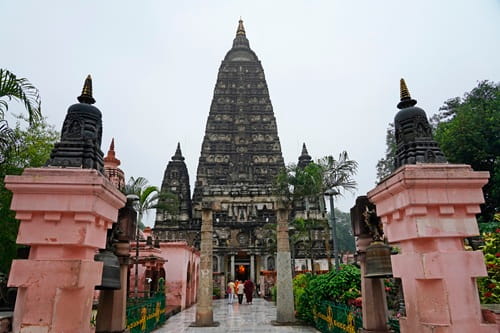
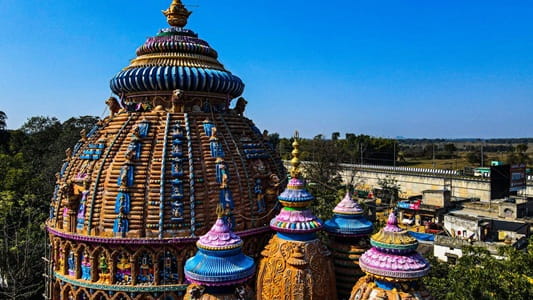
Nothing in Bihar carries more spiritual weight than Bodh Gaya, the site where Gautama Buddha attained enlightenment beneath the Bodhi Tree, an event that eventually shaped a religion followed by hundreds of millions worldwide. The Mahabodhi Temple Complex, a UNESCO World Heritage Site, houses a direct descendant of that original tree alongside the temple itself, and simply sitting quietly in its courtyard genuinely offers a sense of stillness that’s hard to find elsewhere.
Beyond the main temple, Bodh Gaya’s international character genuinely surprises first-time visitors, the Thai Monastery, Japanese Temple, and Royal Bhutan Monastery each bring their own country’s distinct architectural style to the same small town, reflecting how deeply this site resonates across the global Buddhist community. The Great Buddha Statue and Muchalinda Lake round out a genuinely full day of exploration, and if your visit coincides with Buddha Jayanti, you’ll witness the town at its most vibrant and devotional.
Nalanda: Walking Through the World’s Oldest University
About 92 kilometres from Patna sit the ruins of Nalanda University, a UNESCO World Heritage Site that once functioned as one of the world’s most prestigious centres of learning, drawing scholars from Tibet, China, Turkey, Greece, and Persia between the 5th and 12th centuries. Walking through the remains of its viharas and chaityas, monasteries and temple halls still visible despite centuries of decline, genuinely gives you a tangible sense of scale that no textbook description quite captures.
The Nalanda Archaeological Museum houses genuinely impressive Buddhist and Hindu bronzes, terracotta artefacts, and undamaged Buddha statues recovered from the site, while the Hiuen Tsang Memorial Hall commemorates the famous Chinese traveller who reportedly stayed at Nalanda for twelve years, both studying and teaching. This detail alone genuinely tells you how significant this institution once was, a foreign scholar found it worth over a decade of his life to remain here. Combine your Nalanda visit with nearby Pawapuri, a sacred Jain pilgrimage site marking where Lord Mahavira took his last breath, its white marble Jal Mandir sitting beautifully within a lotus-covered water tank.
Patna: Where Bihar’s Living History Genuinely Continues
As Bihar’s capital and one of the world’s oldest continuously inhabited cities, Patna, once known as Pataliputra, offers a genuinely different flavour of heritage than the ancient ruins elsewhere in the state, this is history that remains actively woven into daily religious and civic life. Takht Sri Patna Sahib stands as one of the five Takhts of Sikhism, marking the birthplace of Guru Gobind Singh, the tenth Sikh Guru, and it draws pilgrims from across the Sikh diaspora worldwide.
Beyond this significant gurdwara, Patna Museum and the newer Bihar Museum together showcase the region’s archaeological wealth, ancient coins, bronze sculptures, and artefacts spanning millennia. The Golghar, a distinctive colonial-era domed granary overlooking the Ganges, offers genuinely sweeping views of the river and city from its summit, worth the climb for photography alone. Since Patna functions as the natural gateway to Bihar’s other heritage sites, planning two days here before heading toward Bodh Gaya or Nalanda genuinely makes logistical sense.
Rajgir: The First Capital of an Ancient Empire
Set in a genuinely scenic green valley surrounded by rocky hills, Rajgir served as the first capital of the Magadha kingdom before the seat of power shifted to Pataliputra, and it carries significance across three major faiths, Buddhism, Jainism, and Hinduism all converge here in ways few other Indian destinations can match. This was the birthplace of the 20th Jain Tirthankara and a place closely associated with both Mahavira and Buddha’s own teachings.
Rajgir’s Vishwa Shanti Stupa offers genuinely commanding valley views, reachable via a scenic ropeway, while the Rajgir Hot Springs, Venu Van forest, and the mysterious Cyclopean Wall add natural and archaeological variety to your visit. The Bimbisar Jail ruins and Ajatshatru Fort provide a genuinely tangible connection to the political intrigue of ancient Magadha’s royal history, worth exploring if history genuinely interests you beyond just the religious sites. A single day covers Rajgir’s essentials, though staying overnight lets you experience the town’s natural serenity without rushing between attractions.
Vaishali: Where Buddha Delivered His Final Sermon
Rounding out Bihar’s essential circuit is Vaishali, an ancient archaeological site holding genuine significance for both Buddhists and Jains, this is where Buddha preached his last sermon before his death around 483 BC, and separately, the birthplace of Lord Mahavira, making it a rare site of dual religious importance. The Second Buddhist Council was also convened here, cementing Vaishali’s place in the broader history of Buddhist thought and doctrine.
The preserved Ashoka Pillar stands as a genuinely striking physical reminder of the site’s ancient significance, while the Vishwa Shanti Stupa, Bawan Pokhar Temple, and Vaishali Museum round out a compact but meaningful half-day visit. Vaishali also carries a gentler cultural legacy worth knowing, it’s remembered as the home of Amrapali, the celebrated courtesan and dancer whose story runs through numerous Indian folktales, adding a layer of literary and cultural richness alongside the site’s religious weight.
Frequently Asked Questions
Q1. How many days do I genuinely need to cover Patna, Bodh Gaya, Nalanda, Rajgir, and Vaishali in one trip?
A realistic circuit covering all five destinations comfortably needs about 6 to 7 days, given the relatively short travel distances between them, with 2 days in Patna and roughly a day each for Bodh Gaya, Nalanda, Rajgir, and Vaishali.
Q2. Is Bihar genuinely safe for tourists, particularly solo or first-time visitors to the state?
Yes, Bihar is generally safe for tourists, though it’s genuinely advisable to take standard precautions, book accommodation in advance during peak season since popular sites get crowded, and stick to well-established tourist circuits rather than venturing into unfamiliar rural areas without local guidance.
Q3. Can I combine a Bihar heritage trip with the Buddhist circuit sites in neighbouring Uttar Pradesh?
Yes, genuinely well, Bodh Gaya connects naturally with Sarnath and Kushinagar in Uttar Pradesh as part of India’s broader Buddhist Circuit, so if you have extra time, extending your Bihar trip to include these nearby UP sites creates a genuinely comprehensive Buddhist heritage journey.
Q4. What’s the best way to travel between these five Bihar destinations without wasting time on logistics?
Hiring a car or taxi for the entire circuit genuinely works best, since public transport between smaller heritage towns like Rajgir and Vaishali can be inconsistent, and a private vehicle lets you move between sites on your own schedule rather than working around limited bus timings.

Leave a Reply