
The rapid growth of e-commerce has created new opportunities for businesses of all sizes. Today, entrepreneurs no longer need to invest heavily in building a standalone online store before reaching customers. Instead, they can start selling through multi-vendor marketplaces, where multiple sellers offer products on a single platform.
In India, millions of customers shop through online marketplaces every day, making them an attractive sales channel for startups, small businesses, manufacturers, and established brands. These platforms provide access to a large customer base, built-in payment systems, logistics support, and marketing opportunities. However, they also come with challenges such as intense competition, marketplace fees, and limited control over branding.
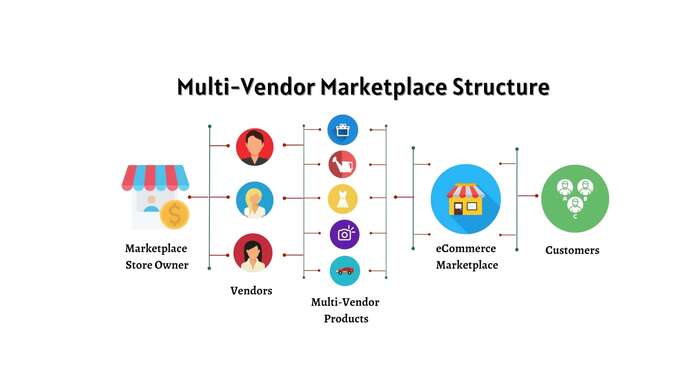
This article explores the advantages and disadvantages of selling on multi-vendor marketplaces and helps you decide whether this business model is suitable for your company.
What Is a Multi-Vendor Marketplace?
A multi-vendor marketplace is an online platform where multiple independent sellers list and sell their products to customers through a common website or mobile application.
Unlike a traditional online store that sells products from a single business, a marketplace hosts thousands of sellers across multiple product categories.
Common features of multi-vendor marketplaces include:
- Product listings from multiple sellers
- Integrated payment gateways
- Order management systems
- Customer reviews and ratings
- Logistics and shipping support
- Return and refund management
Customers benefit from a wide selection of products, while sellers gain access to an existing audience.
How Does a Multi-Vendor Marketplace Work?
The process is relatively straightforward.
- A seller registers on the marketplace.
- Products are listed with descriptions, images, and pricing.
- Customers place orders through the platform.
- The seller or marketplace fulfills the order.
- Payment is processed through the marketplace.
- The marketplace deducts applicable fees before transferring the remaining amount to the seller.
Many marketplaces also offer optional services such as warehousing, advertising, and inventory management.
Advantages of Selling on Multi-Vendor Marketplaces
Selling through an established marketplace offers several business benefits.
1. Access to a Large Customer Base
One of the biggest advantages is immediate access to millions of potential buyers.
Instead of spending significant time and money attracting website visitors, sellers can leverage the marketplace’s existing traffic.
This is especially beneficial for new businesses with limited marketing budgets.
2. Lower Initial Investment
Launching an independent e-commerce website requires investment in:
- Website development
- Hosting
- Payment gateway integration
- Security
- Marketing
Selling through a marketplace eliminates many of these upfront costs, allowing businesses to start selling quickly.
3. Built-In Trust and Credibility
Established marketplaces often have strong customer trust.
Many shoppers feel more comfortable purchasing through well-known platforms because they offer:
- Secure payments
- Buyer protection policies
- Easy returns
- Customer support
This trust can help new sellers generate sales faster than a newly launched standalone website.
4. Easy Payment Processing
Most marketplaces provide integrated payment systems.
Sellers do not need to arrange separate payment gateways or manage payment security independently.
This simplifies financial operations and improves the customer experience.
5. Logistics and Fulfillment Support
Many marketplaces offer logistics services that include:
- Product storage
- Packaging
- Shipping
- Delivery tracking
- Returns management
These services reduce operational complexity, particularly for small businesses.
6. Marketing Opportunities
Marketplaces frequently run:
- Seasonal sales
- Festival promotions
- Sponsored advertising campaigns
- Product recommendation programs
Participating in these initiatives can increase product visibility and boost sales.
7. Quick Market Entry
Businesses can begin selling within a relatively short period after completing seller registration and product listing requirements.
This enables faster market testing and revenue generation.
Disadvantages of Selling on Multi-Vendor Marketplaces
While marketplaces offer convenience, they also present several challenges.
1. High Competition
Thousands of sellers may offer similar products on the same platform.
This intense competition often leads to:
- Price wars
- Reduced profit margins
- Increased advertising expenses
Standing out among competitors requires continuous optimization.
2. Marketplace Fees
Most marketplaces charge multiple fees, including:
- Commission on sales
- Closing fees
- Shipping fees
- Warehousing charges
- Advertising costs
These expenses can significantly affect profitability if not carefully managed.
3. Limited Brand Control
Customers often remember the marketplace rather than the individual seller.
As a result, businesses have limited opportunities to build direct brand recognition or long-term customer relationships.
4. Dependence on Platform Policies
Marketplace operators establish rules regarding:
- Product listings
- Pricing
- Returns
- Customer service
- Seller performance
Policy changes may directly impact a seller’s operations or profitability.
5. Customer Data Limitations
In many cases, marketplaces do not provide sellers with complete customer information.
This makes it more difficult to:
- Build customer loyalty
- Conduct direct marketing
- Develop personalized relationships
Businesses relying solely on marketplaces may struggle to create repeat customers outside the platform.
6. Risk of Account Suspension
Failure to comply with marketplace policies may result in:
- Listing removal
- Account suspension
- Reduced product visibility
- Financial penalties
Maintaining strong seller performance metrics is essential.
Who Should Sell on Multi-Vendor Marketplaces?
This business model is suitable for:
- Small businesses
- Startups
- Home-based businesses
- Manufacturers
- Wholesalers
- Retailers
- Direct-to-consumer (D2C) brands
It is particularly useful for businesses looking to expand their online presence without investing heavily in their own e-commerce infrastructure.
Marketplace vs Standalone E-Commerce Website
| Feature | Multi-Vendor Marketplace | Standalone Website |
|---|---|---|
| Customer Traffic | Existing audience | Self-generated |
| Initial Investment | Lower | Higher |
| Brand Control | Limited | Complete |
| Marketing Responsibility | Shared | Fully managed by business |
| Marketplace Fees | Applicable | No marketplace commission |
| Customer Data | Limited | Greater access |
| Business Independence | Limited | High |
Many successful businesses use both models to diversify their sales channels.
Tips for Succeeding on Multi-Vendor Marketplaces
To improve your performance:
Optimize Product Listings
Use:
- High-quality images
- Detailed descriptions
- Relevant keywords
- Accurate specifications
Well-optimized listings improve search visibility and conversion rates.
Offer Competitive Pricing
Monitor competitor pricing regularly while maintaining healthy profit margins.
Avoid engaging in unsustainable price wars.
Maintain High Seller Ratings
Deliver:
- Quality products
- Fast shipping
- Responsive customer service
Positive reviews improve search rankings and customer trust.
Manage Inventory Efficiently
Keep inventory updated to avoid canceled orders and stock shortages.
Inventory management software can simplify this process.
Use Marketplace Advertising Wisely
Sponsored product campaigns can increase visibility, but monitor your return on advertising spend (ROAS) to ensure profitability.
Common Mistakes Sellers Make
Many businesses face challenges because they:
- Depend entirely on one marketplace.
- Ignore marketplace fees while pricing products.
- Use poor-quality product images.
- Write incomplete product descriptions.
- Neglect customer service.
- Fail to monitor seller performance metrics.
- Ignore negative customer feedback.
Avoiding these mistakes can improve long-term success.
Conclusion
Selling on multi-vendor marketplaces offers businesses an excellent opportunity to reach a large customer base with relatively low upfront investment. Features such as integrated payments, logistics support, established customer trust, and marketing opportunities make marketplaces an attractive option for startups and growing businesses.
However, sellers should also be aware of challenges such as intense competition, recurring marketplace fees, limited branding opportunities, and dependence on platform policies. Many successful businesses combine marketplace selling with their own e-commerce website to balance customer acquisition with long-term brand building.
Before choosing your sales strategy, evaluate your business goals, product category, marketing budget, and growth plans. A diversified approach can help reduce risk while maximizing online sales opportunities.
FAQs
1. What is a multi-vendor marketplace?
A. A multi-vendor marketplace is an online platform where multiple independent sellers list and sell products through a common website or mobile application, while the marketplace manages functions such as payments and, in some cases, logistics.
2. What are the main advantages of selling on a marketplace?
A. Key advantages include access to a large customer base, lower startup costs, built-in customer trust, integrated payment systems, logistics support, and opportunities to participate in platform-wide marketing campaigns.
3. What are the disadvantages of selling on multi-vendor marketplaces?
A. Common disadvantages include intense competition, commission and service fees, limited brand control, dependence on marketplace policies, restricted access to customer data, and the possibility of account suspension for policy violations.
4. Should I sell only through marketplaces?
A. While marketplaces are an effective way to reach customers, relying solely on one platform can increase business risk. Many businesses also operate their own e-commerce website to build brand recognition, retain customer relationships, and diversify revenue sources.
5. How can I increase sales on a multi-vendor marketplace?
A. You can improve sales by optimizing product listings with high-quality images and detailed descriptions, offering competitive pricing, maintaining positive customer reviews, managing inventory efficiently, and using marketplace advertising strategically.






Leave a Reply