
The food industry has undergone a major transformation with the rapid growth of online food delivery platforms and changing consumer preferences. Today, many entrepreneurs are launching food businesses without opening traditional dine-in restaurants. Instead, they are adopting the virtual cloud kitchen model, also known as a ghost kitchen or dark kitchen.
A cloud kitchen focuses exclusively on preparing food for online orders placed through food delivery apps, websites, or direct ordering channels. By eliminating the need for customer seating and expensive restaurant interiors, cloud kitchens can significantly reduce operational costs while reaching a wide customer base.
Although the cloud kitchen model offers several business advantages, it also comes with challenges such as intense competition, dependence on delivery platforms, and limited direct customer interaction. This article explores the advantages and disadvantages of operating a virtual cloud kitchen and helps entrepreneurs determine whether this business model aligns with their goals.
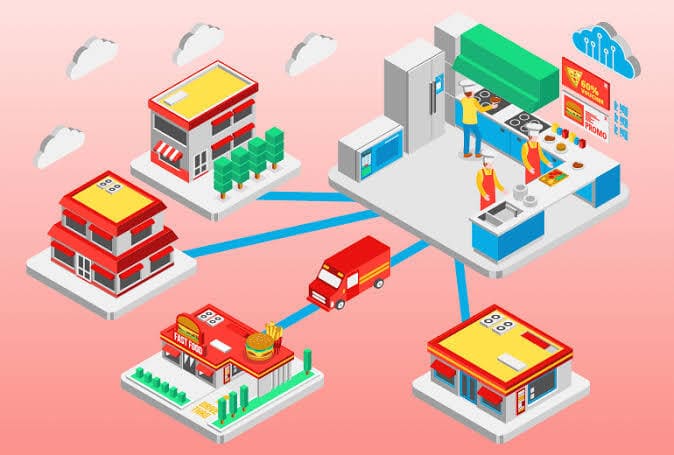
What Is a Virtual Cloud Kitchen?
A virtual cloud kitchen is a commercial food preparation facility that serves customers exclusively through online ordering and delivery. Unlike traditional restaurants, cloud kitchens do not provide dine-in facilities or customer seating.
Customers typically place orders through:
- Food delivery platforms
- The business’s own website
- Mobile applications
- Telephone orders
The kitchen prepares the food, which is then delivered to customers through delivery partners or an in-house delivery team.
Cloud kitchens may operate a single food brand or manage multiple virtual brands from the same kitchen to maximize efficiency and revenue.
How Does a Cloud Kitchen Business Work?
The operating model is relatively simple:
- Customers place food orders online.
- The order is received through a delivery platform or the business’s ordering system.
- The kitchen prepares the food.
- The order is packed securely.
- Delivery personnel collect and deliver the order to the customer.
- Customer feedback and ratings help improve future operations.
Without dining space, businesses can focus on food quality, operational efficiency, and timely delivery.
Advantages of Operating a Cloud Kitchen
1. Lower Startup Costs
One of the biggest advantages of a cloud kitchen is the lower initial investment compared to a traditional restaurant.
Business owners generally save on expenses such as:
- Interior design
- Dining furniture
- Large commercial spaces
- Front-of-house staff
- Customer waiting areas
These savings make cloud kitchens an attractive option for first-time entrepreneurs.
2. Reduced Operating Expenses
Since there are no dine-in facilities, ongoing operational costs are usually lower.
Businesses can reduce expenses related to:
- Utility bills
- Cleaning large customer areas
- Restaurant décor maintenance
- Service staff salaries
Lower overheads can improve profitability if managed efficiently.
3. Wider Customer Reach
Cloud kitchens can serve customers across multiple neighborhoods through food delivery networks.
Instead of relying only on walk-in customers, businesses can attract online orders from a much larger delivery radius, depending on logistics and platform coverage.
4. Faster Business Expansion
Once a cloud kitchen develops a successful operating model, expanding to new locations is often easier than opening multiple full-service restaurants.
Entrepreneurs can replicate:
- Kitchen layouts
- Standard recipes
- Operating procedures
- Technology systems
This supports scalable growth.
5. Multiple Brands from One Kitchen
Many cloud kitchens operate several virtual restaurant brands from the same facility.
For example, one kitchen may simultaneously serve:
- Indian cuisine
- Chinese food
- Pizza
- Desserts
- Healthy meal options
This strategy allows businesses to target different customer segments without renting multiple locations.
6. Data-Driven Decision Making
Online ordering platforms provide valuable business insights, including:
- Popular menu items
- Customer preferences
- Peak ordering hours
- Delivery performance
- Customer ratings
Analyzing this data helps optimize menus, pricing, and operations.
Disadvantages of Operating a Cloud Kitchen
Despite its advantages, the cloud kitchen model has several limitations.
1. Heavy Dependence on Delivery Platforms
Many cloud kitchens rely significantly on third-party food delivery apps to generate orders.
Changes in:
- Commission structures
- Platform algorithms
- Listing visibility
- Delivery policies
can directly affect sales and profitability.
Building direct ordering channels can help reduce dependence over time.
2. High Competition
The online food delivery market is highly competitive.
Customers often compare:
- Prices
- Ratings
- Delivery times
- Promotional offers
Standing out requires consistent food quality, strong branding, and effective marketing.
3. Limited Customer Interaction
Unlike traditional restaurants, cloud kitchens rarely interact directly with customers.
This limits opportunities to:
- Build personal relationships
- Create memorable dining experiences
- Gather in-person feedback
Businesses must rely on online reviews and digital communication to strengthen customer loyalty.
4. Delivery Challenges
Customer satisfaction depends not only on food quality but also on delivery performance.
Issues such as:
- Late deliveries
- Damaged packaging
- Incorrect orders
- Temperature loss
can negatively affect reviews, even when the kitchen prepares excellent food.
5. Marketing Expenses
Although cloud kitchens save on physical infrastructure, they often invest heavily in digital marketing through:
- Sponsored listings
- Social media advertising
- Search engine marketing
- Promotional discounts
Customer acquisition costs can become significant if not carefully managed.
6. Packaging Costs
Cloud kitchens require durable, food-safe packaging that maintains freshness during delivery.
Quality packaging increases operational costs but plays an important role in customer satisfaction.
Who Should Consider Starting a Cloud Kitchen?
A cloud kitchen can be an excellent option for:
- First-time food entrepreneurs
- Home chefs expanding commercially
- Restaurant owners launching delivery-only brands
- Catering businesses
- Food startups
- Existing restaurants testing new cuisines
It is particularly suitable for businesses focusing on online sales rather than dine-in experiences.
Cloud Kitchen vs Traditional Restaurant
| Feature | Cloud Kitchen | Traditional Restaurant |
|---|---|---|
| Initial Investment | Lower | Higher |
| Dine-In Facility | No | Yes |
| Operating Costs | Lower | Higher |
| Customer Interaction | Limited | Direct |
| Delivery Focus | High | Moderate |
| Expansion | Easier | More Capital Intensive |
| Brand Experience | Digital | Physical and Digital |
Both models have their strengths, and many businesses successfully operate both formats.
Tips for Running a Successful Cloud Kitchen
Focus on Food Quality
Consistently delivering high-quality food encourages repeat customers and positive reviews.
Optimize Delivery Time
Fast preparation and efficient coordination with delivery partners improve customer satisfaction.
Invest in Attractive Packaging
Good packaging protects food quality while enhancing your brand image.
Build Your Own Ordering Channel
Encourage repeat customers to order through your website or mobile app where feasible, reducing dependence on third-party platforms.
Monitor Customer Feedback
Regularly review ratings and comments to identify areas for improvement.
Use Data Analytics
Track:
- Best-selling dishes
- Customer preferences
- Order frequency
- Peak business hours
These insights support smarter business decisions.
Common Mistakes Cloud Kitchen Owners Make
Many businesses struggle because they:
- Ignore food quality consistency.
- Underestimate packaging costs.
- Depend entirely on one delivery platform.
- Fail to control food preparation time.
- Offer overly large menus.
- Ignore customer reviews.
- Neglect branding and digital marketing.
Avoiding these mistakes can improve long-term profitability.
Conclusion
The virtual cloud kitchen model has transformed the food service industry by enabling entrepreneurs to launch and grow food businesses with lower startup costs and greater operational flexibility. Its delivery-focused approach, scalability, and ability to operate multiple brands from a single kitchen make it an attractive business model in today’s digital economy.
However, success requires more than simply preparing good food. Entrepreneurs must manage delivery operations efficiently, invest in quality packaging, build a strong online brand, and reduce dependence on third-party platforms wherever possible. By carefully evaluating both the advantages and disadvantages, aspiring business owners can determine whether a cloud kitchen is the right path for their entrepreneurial journey.
FAQs
1. What is a virtual cloud kitchen?
A virtual cloud kitchen is a delivery-only food business that prepares meals for online orders without offering dine-in facilities. Orders are typically received through food delivery platforms, websites, or mobile applications.
2. What are the biggest advantages of a cloud kitchen?
The main advantages include lower startup costs, reduced operating expenses, wider customer reach, faster expansion opportunities, the ability to run multiple brands from one kitchen, and access to valuable customer data.
3. What are the disadvantages of operating a cloud kitchen?
Common challenges include dependence on third-party delivery platforms, intense market competition, limited customer interaction, delivery-related issues, higher digital marketing costs, and ongoing packaging expenses.
4. Can one cloud kitchen operate multiple brands?
Yes. Many cloud kitchens successfully run multiple virtual restaurant brands from the same kitchen, allowing them to serve different cuisines and customer segments while maximizing operational efficiency.
5. Is a cloud kitchen better than a traditional restaurant?
It depends on your business objectives. A cloud kitchen generally requires lower investment and focuses on delivery-based sales, while a traditional restaurant offers dine-in experiences and stronger direct customer engagement. The right choice depends on your target market, budget, and long-term growth strategy.


Leave a Reply