
Two people, from different religions, different castes, or simply preferring simplicity over spectacle, walk into a Sub-Registrar’s office instead of a wedding hall, sign a few documents in front of three witnesses, and walk out legally married within a single day. Court marriage has genuinely become a growing choice across Indian metros, with registrations rising 30% in cities like Delhi, Mumbai, and Bangalore over recent years, and understanding exactly what this route offers, and what it doesn’t, matters whether you’re considering it yourself or trying to make sense of why increasing numbers of couples are choosing this over traditional ceremonies.
Here’s what makes this genuinely relevant right now: interfaith and inter-caste marriages have grown considerably in India, and many couples in these situations face genuine family resistance to a traditional religious wedding. Court marriage, governed by the Special Marriage Act, 1954, offers a secular alternative that sidesteps this friction entirely, but it comes with its own genuine trade-offs worth understanding clearly before you decide this is the right path for your specific situation.
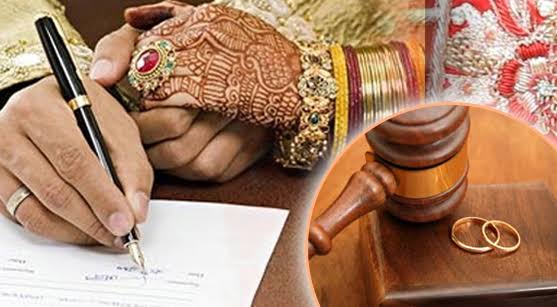
What Court Marriage Actually Is, and Why It Exists
Court marriage refers to a legally recognised union solemnised under the Special Marriage Act, 1954, performed before a Marriage Officer, usually the Sub-Registrar, and three witnesses, without requiring any religious rituals or customs whatsoever. This framework was specifically designed to let two individuals marry regardless of religion, caste, or nationality, without either party needing to convert their faith or adopt the other’s customs.
This matters enormously in a country where marriage traditionally involves elaborate religious ceremonies tied closely to specific faith practices. For couples from different religious backgrounds who don’t want to navigate the complexity of converting or blending two distinct ceremonial traditions, court marriage genuinely provides a neutral, legally solid alternative that neither family’s religious framework needs to accommodate.
Legal Certainty That Genuinely Protects Both Spouses
One of court marriage’s most significant advantages is genuinely straightforward: it removes any ambiguity about the marriage’s legal validity. Since the marriage is solemnised under a uniform legal framework applicable across all of India, the marriage certificate issued serves as conclusive evidence of the union, valid nationwide regardless of which state you eventually settle in or travel to.
This legal certainty extends into genuinely practical territory too, inheritance rights, spousal maintenance, and property ownership all become clearly established through this documentation. For couples navigating inter-caste or interfaith marriages, this legal clarity genuinely matters more than it might for couples marrying within the same community, since it removes any future dispute about whether their marriage holds legal standing under customary or religious frameworks that might not fully recognise a mixed union.
Freedom From Family Resistance Tied to Caste and Religion
This is genuinely where court marriage offers its most meaningful social advantage. Since the Special Marriage Act operates entirely outside religious and caste frameworks, couples facing family opposition specifically rooted in these concerns can proceed with a legally valid marriage without needing family blessing or religious ceremony approval. This has become a genuine lifeline for couples whose relationships would otherwise face insurmountable resistance under traditional customs.
That said, it’s worth being honest that court marriage doesn’t eliminate family conflict entirely, it simply provides a legal pathway forward despite that conflict. Many couples who choose this route still navigate difficult family relationships afterward, court marriage protects the legal validity of the union, but it doesn’t automatically resolve the emotional or social tension that led families to resist in the first place.
The Mandatory 30-Day Notice Period Genuinely Cuts Both Ways
This procedural requirement deserves careful attention since it’s simultaneously a safeguard and a genuine source of vulnerability for some couples. The Special Marriage Act requires couples to file a Notice of Intended Marriage, which then gets publicly displayed at the Sub-Registrar’s office for 30 days, during which anyone can raise a legal objection.
This transparency genuinely protects against fraud and bigamy, ensuring no one enters a court marriage while already legally married to someone else. But it also means couples specifically trying to marry quietly, away from family knowledge, due to anticipated opposition, find their intentions publicly revealed during this window, sometimes leading to exactly the family interference or objection they were hoping to avoid by choosing court marriage in the first place.
Simplicity That Genuinely Saves Time and Money, With Some Trade-Offs
Compared to elaborate traditional weddings involving multiple ceremonies, extensive guest lists, and significant expense, court marriage is genuinely more economical and considerably less time-consuming. With proper documentation and witnesses arranged in advance, the actual solemnisation can happen within a single day once the notice period concludes, a stark contrast to the weeks or months traditional wedding planning typically demands.
This simplicity does come with a genuine emotional trade-off worth acknowledging honestly. Court marriages generally lack the cultural traditions, rituals, and communal celebration that traditional weddings provide, and for couples who value this ceremonial, family-centred experience, court marriage’s stripped-down civil process may feel like it’s missing something meaningful, even if the legal outcome is identical.
Documentation Requirements That Genuinely Demand Advance Preparation
Getting through the court marriage process smoothly genuinely requires organising several documents in advance, identity and address proof, recent photographs, and if either party was previously married, a divorce decree or death certificate of a deceased spouse. Three witnesses are also required, each needing to bring their own address proof, meaning you’ll need to arrange this support in advance rather than assuming friends can simply show up unprepared.
For couples where one partner is a foreign national, additional requirements apply too, including a No Objection Certificate from their respective embassy confirming their eligibility to marry. Missing or incomplete documentation genuinely causes delays, so preparing everything carefully before beginning the notice process saves considerable frustration later.
Frequently Asked Questions
Q1. Can court marriage genuinely be completed in a single day, or does the entire process take longer than that?
A. The actual solemnisation ceremony itself can genuinely happen within a day once all requirements are met, but the mandatory 30-day notice period must complete first, meaning the overall process from filing your notice to receiving your marriage certificate typically takes at least a month, sometimes longer if objections or documentation issues arise.
Q2. Does choosing court marriage mean we can’t have a traditional wedding ceremony afterward too?
A. No, genuinely not. Many couples complete their legal court marriage and then separately hold a traditional religious or cultural ceremony afterward for family and community celebration, since the court marriage handles the legal recognition while the traditional ceremony can still fulfil the cultural and emotional aspects of the wedding.
Q3. If our families are likely to object during the 30-day notice period, is there any way to avoid this public disclosure?
A. Unfortunately, no, the notice publication requirement is a mandatory legal safeguard under the Special Marriage Act and cannot be skipped or expedited, so couples anticipating strong family objection need to plan for this transparency and potentially prepare for confrontation during this specific window rather than assuming they can marry entirely under the radar.
Q4. Are court marriages given the same legal weight as religious marriages when it comes to divorce, custody, or inheritance disputes later?
A. Yes, genuinely, marriages registered under the Special Marriage Act carry full legal standing equivalent to religiously solemnised marriages for matters including divorce proceedings, child custody, spousal maintenance, and inheritance rights, governed consistently under Indian law regardless of how the marriage was originally performed.








Leave a Reply