
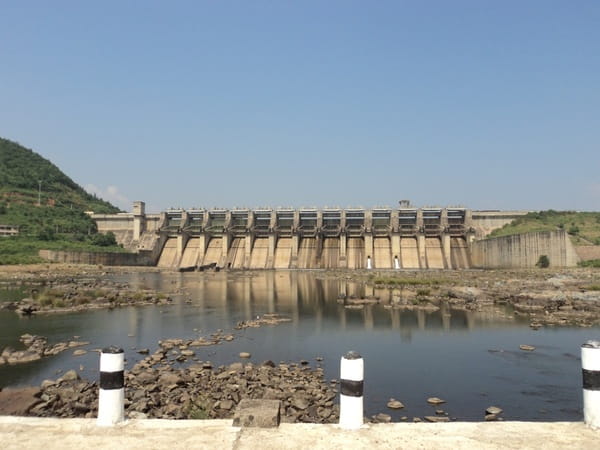
Lonavala Bhushi Dam — universally referred to as Bhushi Dam or simply the Bhushi — is the single most iconic monsoon landmark of Lonavala and one of the most visited natural-recreational destinations in all of Maharashtra, drawing hundreds of thousands of visitors every year from across Mumbai, Pune, and the rest of the country to witness and participate in its celebrated annual waterfall spectacle. Sitting on the Indrayani River in the verdant Sahyadri range of the Western Ghats, Bhushi Dam was originally constructed in the late 1860s by the Great Indian Peninsular Railway — the colonial predecessor of today’s Indian Railways — as a dedicated water source for the steam locomotives that hauled passengers and freight across the demanding gradients of the Mumbai–Pune mountain railway corridor. Water from the dam was carried via cast-iron pipes to locomotive servicing stations at Lonavala, Khandala, and the famous reversing station, making Bhushi Dam an integral and invisible backbone of India’s early railway infrastructure. The dam is today owned by Indian Railways, and its reservoir additionally serves Tata Power for hydroelectric generation — silently powering homes and streets across Lonavala and Khandala.
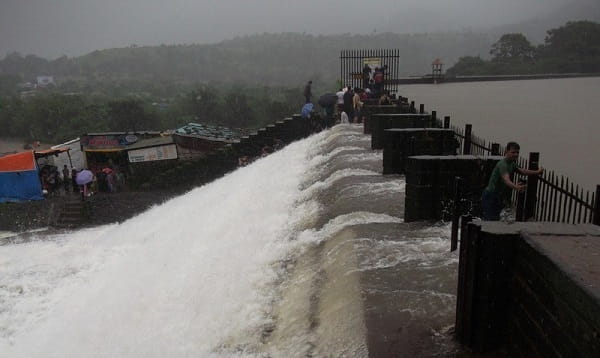
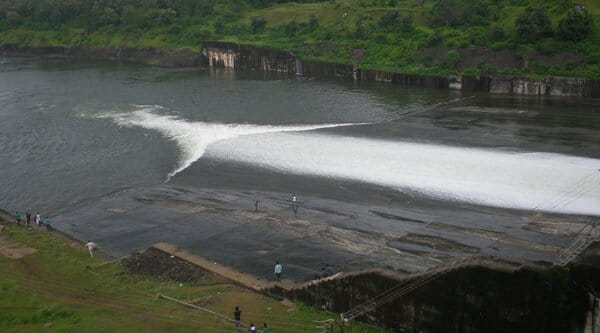
What transformed this railway utility structure into one of Maharashtra’s most emotionally resonant tourist destinations is the brilliantly simple design of its stepped downstream face. Every monsoon, when the Sahyadri hills receive their annual torrent of rainfall and the Bhushi reservoir fills beyond capacity, water begins to overflow across a broad series of masonry steps set into the dam wall — cascading down in wide, shallow curtains of white rushing water across stone surfaces that are perfectly accessible to visitors. Families wade in ankle-deep to knee-deep flows, children laugh as water surges past them, photographers frame the white curtain of overflowing water against the deep green of monsoon-drenched hills, and the entire dam site becomes a joyful, open-air amphitheatre of shared exhilaration. This is the soul of Bhushi Dam — not a monument to be observed from a distance but an experience to be physically entered, felt, and remembered. Hot pakoras sizzle at roadside stalls in the mist, the smell of wet basalt and fresh mountain rain fills the air, and the unmistakable sound of water rushing over stone creates the soundtrack of what generations of Pune and Mumbai residents have come to know as the definitive Lonavala monsoon morning.
Lonavala Bhushi Dam Location
Lonavala Bhushi Dam is positioned within the Western Ghats hill station of Lonavala, Pune District, Maharashtra — tucked just off the old Mumbai–Pune highway (NH-48), flanked by the INS Shivaji Naval Base on one side and forested Sahyadri ridgelines on the other.
- Address: Bhushi Dam, INS Shivaji Road / Old NH-48, Bhushi Village, Lonavala, Pune District, Maharashtra — 410401
- Pin Code: 410401
- STD Code: 02114
- Administrative Zone: Maval Taluka — Pune District / Maval Parliamentary Constituency
| Reference Point | Distance |
| Lonavala Railway Station | 6 kilometres |
| Khandala Railway Station | 2 kilometres |
| INS Shivaji (Naval Base) | Adjacent |
| Lonavala Town Centre | 7 kilometres |
| Valvan Dam | 6 kilometres |
| Tiger’s Leap (Waghdari Point) | 8 kilometres |
| Lion’s Point (Sunset Point) | 10 kilometres |
| Karla Caves | 12 kilometres |
| Rajmachi Fort | 15 kilometres |
| Pune | 70 kilometres |
| Mumbai | 88 to 96 kilometres |
| Pune International Airport | 70 kilometres |
| Mumbai CSMIA Airport | 95 kilometres |
Timings and Entry Fee of Lonavala Bhushi Dam
Bhushi Dam is a freely accessible public landmark — there is no entry gate, no ticket counter, and no admission charge — making it one of Maharashtra’s most democratically open natural attractions, welcoming every visitor regardless of budget.
| Detail | Information |
| General Visiting Hours | 9:00 AM to 5:00 PM (daily) |
| Entry Fee | Nil — completely free for all visitors |
| Parking | Available near the dam site — nominal parking charges applicable |
| Swimming | Strictly prohibited — unpredictable current and deep pools beyond the steps are dangerous |
| Alcohol and Loud Music | Banned at the dam site — strictly enforced by local police |
| Peak Monsoon Restrictions | District authorities may temporarily restrict access during extremely heavy rainfall |
| Food and Snack Stalls | Available along the approach road and at the dam — bhajji, pakora, vada pav, chai, corn, Lonavala chikki |
| Best Time of Day | Late morning to early afternoon for peak water flow and the most dramatic step cascade |
| Safety Advisory | Wear rubber-soled footwear — steps are slippery — do not wade beyond comfortable depth — supervise children |
How to Reach Lonavala Bhushi Dam
Bhushi Dam is conveniently accessible from both Mumbai and Pune by road and rail — it lies directly on the Mumbai–Pune Central Railway line and the Mumbai–Pune Expressway corridor, making it one of the most commuter-friendly hill station attractions in western India.
From Mumbai
Take the Central Railway local or express train to Lonavala → hire a taxi or auto-rickshaw to Bhushi Dam → approximately 88 to 96 kilometres — 1.5 to 2.5 hours by train. By road via NH-48 Mumbai–Pune Expressway → approximately 2 hours.
From Pune
Take a cab or private vehicle via NH-48 → approximately 70 kilometres — 1 hour to 1 hour 30 minutes. MSRTC buses from Pune bus stand to Lonavala are frequent and affordable.
From Lonavala Railway Station
Take a local auto-rickshaw, taxi, or tuk-tuk southward from the station toward Bhushi Dam → approximately 6 kilometres — 10 to 15 minutes.
From Khandala Railway Station
Take a taxi northwestward → approximately 2 kilometres — 5 to 8 minutes.
Best Time to Visit Lonavala Bhushi Dam
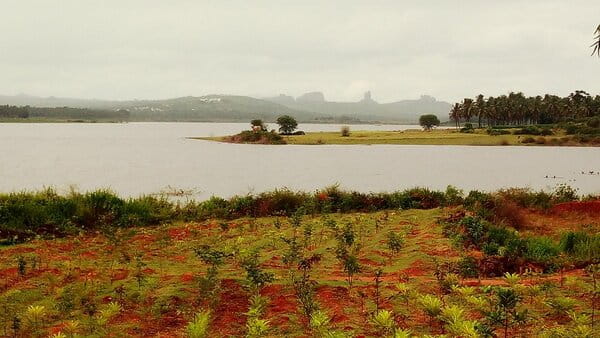
Lonavala Bhushi Dam completely transforms across seasons — from an electric, overflowing monsoon waterfall experience to a quietly scenic winter reservoir surrounded by cool mist-wrapped hills.
| Season | Months | Experience |
| Monsoon — Absolute Best | July to September | Dam overflows — water cascades down stone steps — peak waterfall experience — lush green Sahyadri surroundings |
| Post-Monsoon | October to November | Reservoir still relatively full — greenery lush — weather cooling down — far fewer crowds than monsoon |
| Winter | December to February | Pleasant and cool — peaceful atmosphere — dam may have reduced overflow — great for hillside photography |
| Summer | March to June | Warmer months — reduced overflow — early morning visits recommended — fewer tourists |
The undisputed best time to visit is July to September — specifically on weekday mornings to avoid the dense weekend crowds that make the stone steps difficult to navigate during peak Diwali and August holiday periods. September offers a near-perfect balance of active water flow, lush surroundings, and more manageable visitor numbers. During heavy unseasonal rainfall, always check local advisories before visiting as district authorities may temporarily close the dam for safety.
Nearby Places to Visit Lonavala Bhushi Dam
Lonavala is a treasure trove of natural viewpoints, ancient Buddhist caves, Maratha forts, and adventure attractions — all within a short drive from Bhushi Dam, making it ideal for a full-day or weekend itinerary.
| Place | Distance | Description |
| Tiger’s Leap (Waghdari Point) | 8 km | Dramatic clifftop viewpoint — sheer 650-metre vertical drop into the valley — one of Maharashtra’s most awe-inspiring natural vistas |
| Lion’s Point (Sunset Point) | 10 km | Sprawling hilltop viewpoint — spectacular valley panoramas and the most photographed monsoon sunsets in Lonavala |
| Kune Falls | 12 km | Maharashtra’s highest waterfall at approximately 200 metres — seasonal monsoon spectacle of extraordinary scale |
| Karla Caves | 12 km | First-century BC Buddhist rock-cut cave complex — one of Maharashtra’s finest preserved ancient heritage sites |
| Bhaja Caves | 14 km | Second-century BC Buddhist monastery caves — intricate rock architecture and panoramic ghats views |
| Valvan Dam | 6 km | Quieter and less crowded dam near Lonavala — ideal for peaceful picnics and sunset photography |
| Rajmachi Fort | 15 km | Historic Maratha twin-citadel fort — Shrivardhan and Manaranjan — popular trekking destination |
| Della Adventure Park | 15 km | Premier adventure park with 70-plus activities — bungee jumping, go-karting, sky cycling |
| Lonavala Lake | 5 km | Peaceful lake within Lonavala town — ideal for calm morning walks and bird watching |
| Lonavala Chikki Market | 5 km | Famous street market selling Lonavala’s signature peanut-jaggery chikki — unmissable local souvenir |
Frequently Asked Questions (FAQs)
Q1. Where is Lonavala Bhushi Dam located?
A: Bhushi Dam is on the Indrayani River, INS Shivaji Road, Bhushi Village, Lonavala — PIN 410401 — approximately 6 kilometres from Lonavala Railway Station and 2 kilometres from Khandala Station.
Q2. What are the timings and entry fee of Bhushi Dam?
A: Bhushi Dam is open daily from 9:00 AM to 5:00 PM. Entry is completely free. Parking attracts a nominal charge. Alcohol and loud music are banned at the dam site.
Q3. Why is Bhushi Dam so famous?
A: The dam is famous for its stepped overflow design — during monsoon, water cascades down wide, accessible stone steps creating a natural waterfall that visitors can safely sit in, creating one of Maharashtra’s most iconic recreational water experiences.
Q4. What is the best time to visit Lonavala Bhushi Dam?
A: July to September is the best monsoon period when water cascades over the steps. September weekday mornings are ideal — active water flow combined with more manageable crowds. Winter (October to February) offers peaceful, scenic visits without the overflow.
Q5. How do I reach Bhushi Dam from Mumbai and Pune?
A: From Mumbai: Central Railway train to Lonavala then taxi (6 km) — approximately 2 hours. From Pune: cab via NH-48 — approximately 70 kilometres and 1 hour 30 minutes.





Leave a Reply